
Clear And Unbiased Info About What Is Macadamia (With out All of the H…
페이지 정보
작성자 Priscilla 작성일 26-08-01 08:29 조회 2 댓글 0본문
 In fact, it is actually the most important producer of macadamia nuts within the nation. Currently the two States equally share Australia's world-dominating macadamia export market, but massive plantings in Queensland will ensure it becomes the main future producer. Around this time a small orchard of approximately 30 macadamia timber, including the tree underneath dialogue here, was established at Colliston, although some experimental plantings could have occurred earlier. The H2 Hinde tree is the only real surviving of the three macadamia timber on Colliston that have been tagged in 1948 by John McGregor Wills, and eventually registered as scion wood and assigned cultivar names in 1960. Of the three initially tagged trees, only the H2 variety was used for business functions. Macadamia bushes, or their nuts, had many different names throughout this period: in New South Wales they have been known as Bush Nuts or Mullimbimby Nuts; further north they have been known as Queensland Nuts or Bauple Nuts (or Bopple and Popple); and in all areas they had been referred to as Australia Nut, Poplar and Nut Oak. The primary Australian industrial macadamia orchards have been established in New South Wales from the late 1870s. It was not until 1910 that the first small orchard was planted in Queensland close to Coolum.
When industrial pursuits began to take a position within the business during the early 1960s, led by the Colonial Sugar Refining Company, the H2 Hinde, only one other Australian cultivar, and a variety of Hawaiian cultivars had been deemed most fitted for industrial cultivation; the H2 being most applicable for areas with a temperate local weather. He planted them to act as a windbreak for sugar cane fields. During the first twenty years of the twentieth century each State Departments of Agriculture were actively buying data concerning the crop and assessing its industrial potential, however the issue of cracking the usually thick shells enclosing the edible kernels thwarted growth of the industry. He has also had a long involvement with the Australian Macadamia Society Ltd, significantly with its Technical Advisory Committee and has been instrumental in furthering information of the genus and establishing the Macadamia Conservation Trust, which aims to protect remaining native timber.
This work was led by the Australian Macadamia Society, which was formed out of Queensland in 1974, below the auspices of its Technical Advisory Committee (established in 1980), and the monies it levied from members. It's the mum or dad of a selection (see notice below) of the species Macadamia integrifolia and was probably planted within the 1920s. It was registered by the Queensland Department of Agriculture and Stock in 1960 as a scion wood (see observe beneath) and in the 2 decades after that point, a big number of economic orchards within the State propagated bushes using material from this tagged mum or dad tree, it being one in all only two Australian-developed varieties to have then achieved such a status. The H2 Hinde tree on Colliston is the father or mother from which all different clones of this selection have been propagated. It was its vulnerability to fungal illness that destroyed the small orchard of which the remaining, tagged H2 Hinde tree had been half. When the commercial orchard bushes of the H2 Hinde variety had reached the tip of their financial or bearing lives (as distinct from their pure life spans) in the 1980s, they have been replaced with timber grown from different scion woods that had been extensively trialled and found to possess numerous fascinating characteristics, most notably imperviousness to certain fungal infections.
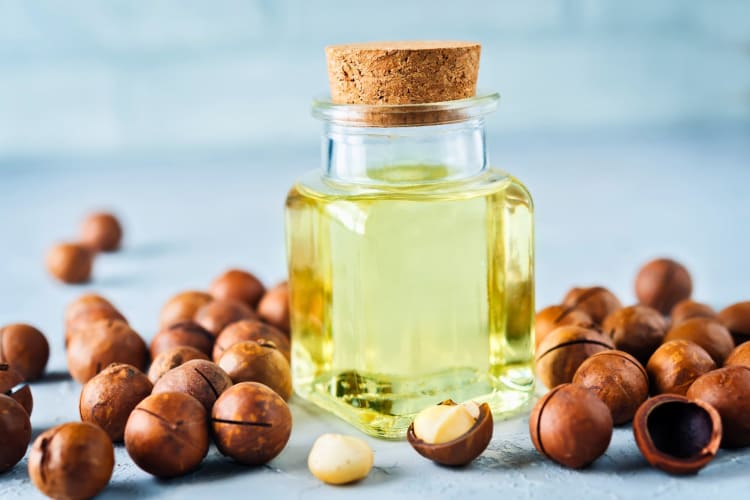
After World War II the industrial cropping of macadamia trees in Queensland was given renewed consideration by its Department of Agriculture and Stock by the methodical survey, choice and experimental propagation of scion and inventory material. From 1931 the Queensland Department of Agriculture and Stock started to promote macadamia tree cultivation as an adjunct to different farming activities. The macadamia nut is a tasty fruit that grows on a particular tree. A dad or mum tree is a genetically unique plant that is selected for specific traits, in the case of macadamias these embody: sturdy tree development, low incidence of pests and diseases, low incidence of stick-tights and premature germination of nuts, lowered years to bearing, excessive kernel quality and desirable market requirements. The general public was significantly involved within the nuts, evidenced by a nineteen thirties estimation of the massive variety of timber being grown in backyards; 20,000 in Brisbane and 30,000 between Grafton and Maryborough. 1946: A very massive macadamia farm was began in Hawaii.
댓글목록 0
등록된 댓글이 없습니다.